


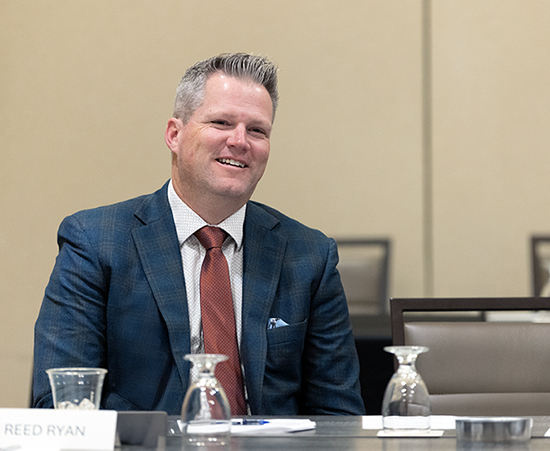
In January I had the opportunity to attend the Transportation Research Board (TRB) Annual Meeting in Washington, D.C. for the first time. It was energizing in every way – standing-room sessions, meaningful conversations and a steady reminder that our industry is full of people who care deeply about performance, safety and the future of our infrastructure.
I enjoyed the experience, and I left encouraged by the talent and commitment I saw across the transportation community. TRB is a unique environment where research, innovation and practical field experience intersect. You can feel the momentum in the hallways as much as you can in the meeting rooms.
And yet, I also left TRB with a thought I haven’t been able to shake.
We are exceptionally good at learning.
We gather. We test. We publish. We refine. We debate. We network. We compare notes. We improve the questions. We add more data. In many ways, our profession has never been more informed or more connected than it is today.
But too often, we stop short of something more difficult: understanding.
Because understanding isn’t just knowing more, it is seeing clearly enough to act. It’s being willing to make decisions, to commit, to build, to pilot, to adopt what works and to let go of what does not. Understanding requires discernment. It requires leadership. And sometimes, it requires the courage to move forward even when the work is not finished and the answers are not perfect.
There is real value in careful study. There is also real risk in perpetual hesitation. In our world, the greatest danger is not that we will try something and fail; it’s that we will become so cautious that we stop trying altogether. The risk of not risking anything at all is that progress slows, opportunities pass and momentum is lost – not because we lacked information but because we lacked action.
That is where the Asphalt Institute’s role becomes especially important. Our mission is not only to promote quality asphalt and sound engineering practices, but to help bridge the gap between what we learn and what we implement. Through engineering, research, education and stewardship, we work to translate knowledge into real-world outcomes, meaning the kind of outcomes that improve safety, performance, durability and value for the traveling public.
As we move into 2026, my hope is that we continue learning at a high level, but that we also pursue the harder work of understanding. Not for the sake of certainty, but for the sake of progress. We should remain committed to innovation and open to new ideas, while also having the discipline to apply what we know, measure results and keep moving forward.
Because at the end of the day, the public doesn’t experience our research, they experience our results.