


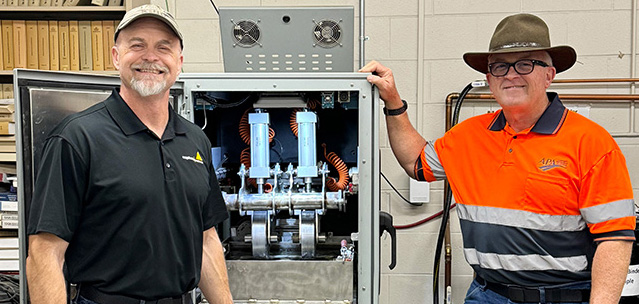
Welcome to the fifth installment of MixBusters—truths about asphalt myths, emulating the theme of the Discovery Channel program, “MythBusters.” Together, Buzz and Dave have over 70 years of experience designing, constructing, maintaining and experimenting with asphalt pavements.
For 15 years, MythBusters would address various myths or urban legends to try to determine if they were true or not. Similarly, within the asphalt world, there are many long and often strongly held beliefs that may need to be examined objectively to establish if they are true.
Moreover, the authors have a willingness to question and challenge various “truths” we “know” about the design, construction and maintenance of asphalt pavements. Drawing heavily on the eight completed cycles of the Pavement Test Track operated by the National Center for Asphalt Technology (NCAT) at Auburn University and untold numbers of field projects, they will explore topics that they recognize as needing to be examined for their validity.
For this fifth submission, Buzz and Dave welcome two additional industry experts, Dr. Grover Allen, P.E., Asphalt Institute Regional Engineer, and Nathan Moore, P.E., Test Track Director, National Center for Asphalt Technology. Dr. Allen contributed mightily to the OGFC and trackless tack coat topics, while Mr. Moore was a huge help with the friction topic.
MYTH
“OGFCs provide safety benefits—but always at the cost of significantly reduced service life.”
This is the common sentiment regarding open graded friction courses (OGFCs). But is this true?
The truth: OGFCs have long been recognized for improving wet-weather safety by reducing hydroplaning and spray. However, many agencies accept a tradeoff: improved safety in exchange for reduced durability, often expecting service life to be roughly half that of dense-graded mixtures.
But that tradeoff is not inevitable.
The durability challenges of OGFCs stem primarily from its high air void structure, which accelerates binder aging and increases susceptibility to raveling. However, these challenges can be effectively addressed through a coordinated approach across materials, mix design, construction and preservation.
Material selection is the first critical step. Because oxidation drives deterioration, highly polymer-modified binders—such as High Polymer (HP)—can significantly improve resistance to aging. In an OGFC, this could be considered a baseline requirement rather than an upgrade.
Mix design also plays a key role. Increasing binder content, incorporating baghouse fines, and modestly reducing air voids (e.g., from ~20% to ~15%) can dramatically improve resistance to raveling while maintaining permeability. Balanced mix design principles can help ensure durability without compromising function.
Construction practices are equally important. Thin OGFC lifts cool rapidly, reducing compaction time, while poor tack application can lead to premature failure. Uniform bond and proper temperature management are essential for long-term performance.
Preservation is often overlooked but highly effective. Rejuvenating fog seals can slow aging without clogging the void structure, extending service life when applied proactively.
The verdict: When these strategies are combined, OGFC durability improves dramatically. Agencies that have implemented these practices are demonstrating that OGFCs can achieve service lives approaching those of dense-graded mixtures— while still delivering critical safety benefits. OGFC life is not inherently short. It depends on how well it’s designed, built and maintained.
References
Asphalt magazine, “What is happening with our OGFCs” June 2024
NCAT Report 20-07: Long- Term Field Performance of Rejuvenator Seals for OGFCs
Powell, Buzz, et al. (2020). “Preservation Techniques for OGFC Pavements”
Georgia DOT and Florida DOT research collaborations with NCAT
MYTH
“If I measure high friction, I know my road is safe.”
The truth: Most state departments of transportation have long relied on locked-wheel trailer testing with a ribbed tire under wet conditions as a consistent and repeatable way to assess pavement friction. This approach has provided a valuable baseline for network-level friction management and has contributed to safer roadways across the country. However, as our understanding of tire–pavement interaction continues to evolve, it’s worth considering whether this single metric fully captures the conditions that influence real-world safety, particularly during high-speed wet-weather events. Furthermore, the tools that we must use to measure pavement friction and to assess risk are constantly improving, providing us with more information for data-informed decisions.
A key distinction lies in the roles of microtexture and macrotexture. Dense-graded asphalt (DGA) mixtures with high-quality aggregates are often very effective at developing durable microtexture, which provides adhesion at the tire–pavement interface and is reflected in ribbed tire locked-wheel friction measurements. However, macrotexture, the larger-scale surface texture that facilitates water drainage and maintains tire contact under dynamic conditions, is not directly captured in the same way by the ribbed tire. During testing, the ribbed tire evacuates almost all of the water, promoting good contact between the tire and the pavement, even on low macrotexture pavement. As a result, a pavement may perform well in traditional ribbed-tire friction testing while still creating challenges when water evacuation is critical.
This distinction becomes especially important on high-speed facilities, in areas with challenging horizontal curvature, on pavements where rutting causes pooling water, or in areas where vehicles may be operating with reduced tire tread depth. In these cases, the ability of the pavement surface to quickly evacuate water from the tire–pavement interface is just as important as the frictional resistance from the aggregates measured under standardized conditions. Surfaces with limited macrotexture may allow a thin film of water to persist, dramatically increasing the potential for hydroplaning even when measured friction values are acceptable.
It’s important to emphasize that this reflects the complexity of the parameter being measured. Locked-wheel friction testing was never intended to fully replicate all aspects of tire–pavement interaction, particularly those involving fluid dynamics at higher speeds. Instead, it serves as a practical and standardized indicator of surface condition. Expanding our perspective to include additional surface characteristics—such as macrotexture—can complement existing practices and provide a more complete picture of pavement friction performance. A simple approach adopted by some agencies is to conduct field testing with the smooth tire instead of the ribbed tire. The smooth tire provides no channels to evacuate water, forcing the water to travel through the channels in the pavement macrotexture. If macrotexture is too low, the contact between the tire and pavement is reduced, thereby reducing the friction. Thus, smooth tire testing is better suited for assessing the safety of potentially low macrotexture surfaces.
A common critique of these methods is that neither of the two tires accurately represents the tires used by the public. Although this is true, the two tires represent standardized test methods and produce repeatable data. Smooth tire testing can sometimes make pavement friction appear low due to the lack of water removal from the tire, and ribbed tire testing can make pavement friction appear high because it relies less on macrotexture. Neither is perfect, and each one has its benefits and drawbacks. However, friction management programs or investigations that use both are positioned well for success. Continuous friction measuring equipment (CFME) captures the effects of both microtexture and macrotexture by continuously measuring sliding friction while traveling, and macrotexture with a laser ahead of the sliding tire. A key benefit of CFME is the ability to capture network-level macrotexture and friction response for an entire pavement network.
The verdict: High friction alone does not guarantee safety. True performance depends on both friction and texture. Ultimately, the goal is not to redefine what constitutes an acceptable pavement, but to continue refining how we assess and manage safety in an increasingly data-rich environment. By accounting for friction from both microtexture and macrotexture, especially in high-speed, high-risk conditions, agencies can further improve roadway performance and better align measurement practices with the realities of modern traffic and vehicle conditions.
MYTH
“Trackless tack coats are too stiff for cold climates and will fail due to brittle fracture as temperatures drop.”
The truth: Cold-weather skepticism around trackless tack coats is rooted in a reasonable concern: stiff binders are often associated with brittle behavior at low temperatures. The assumption is that this brittleness could lead to interlayer fracture and loss of bond strength. However, field evidence tells a very different story.
A controlled study at MnROAD’s low-volume road loop directly evaluated this issue. In 2016, adjacent OGFC test sections were constructed over both HMA and PCC surfaces using two different interlayer systems: a conventional asphalt emulsion tack coat and a hot-applied trackless tack membrane (UltraFuse). The trackless system utilized an extremely stiff binder (penetration <10 dmm, softening point >180°F), making it an ideal candidate to test the brittle fracture concern.
During construction, the trackless tack created a uniform, continuous membrane that eliminated pickup and allowed immediate trafficking. In contrast, the emulsion tack required curing and showed susceptibility to tracking— particularly in wheel paths—leading to variability in residual asphalt coverage.
It should be noted that the PCC section is particularly demanding of good bonding characteristics due to the higher shear stresses that are present at the interface of the existing rigid pavement and the overlay.
Performance over time revealed that both systems performed adequately in terms of rutting and ride quality. However, the trackless tack sections demonstrated more consistent durability and reduced cracking, particularly in the highly permeable OGFC system where bond continuity is critical.
Then came the ultimate test: the January 2018 Polar Vortex. With temperatures plunging below -40°F, conditions were ideal to expose any brittle fracture tendencies. Follow-up evaluations showed no bond-related distress in the trackless tack sections.
This aligns with findings from NCHRP Report 712, which show that interlayer bond strength increases significantly as temperatures decrease—often by a factor of ten compared to hot conditions. If bond failure is a concern, it is far more likely to occur during high-temperature loading than in extreme cold.
That said, construction of pavements in cold-weather locations still demands attention to surface condition, cleanliness and application rate. But the idea that stiff tack coats are inherently unsuitable for cold climates is not supported by the evidence.
The verdict: Trackless tack coats are not a cold-weather risk. They are a cold-weather advantage.
Dr. Buzz Powell, P.E., is the Asphalt Pavement Alliance Technical Director. Dave Johnson P.E. is an Asphalt Institute Senior Regional Engineer.