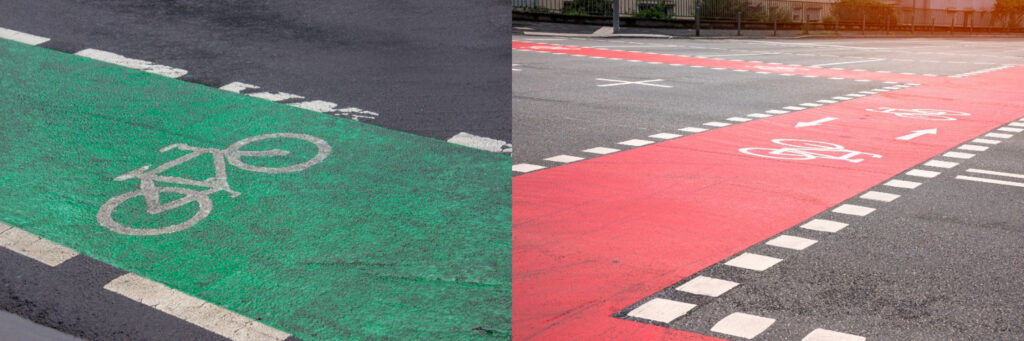



Asphalt has many different uses, from road paving and coatings to sealants and decorative applications. One of the growing trends is the use of colorized asphalt, which combines visual appeal with practical benefits.
This article reviews the most common technologies for asphalt coloring such as surface coatings, pigmented asphalt mixes, reflective coatings and thermoplastic markings. It also describes their advantages, limitations and possible effects on performance and sustainability.
Colorized asphalt has become very popular in urban areas, representing an evolution in the way we design roads and public spaces. It allows for the combination of aesthetics and functionality, improving traffic safety through color differentiation and enhancing urban integration.
These systems are now frequently used for bike lanes, pedestrian crossings, dedicated bus lanes and even for sports areas such as skateparks. In some cases, they are also used to display brand logos on racetracks or promotional spaces.
The main objective of colored asphalt is to improve the visual integration of pavements with their surroundings, increase visibility and safety and possibly lower surface temperatures. In addition, some systems extend the service life of pavements using UV resistant and heat stable materials.
Classification of coloring processes
1. Surface coatings
Surface coatings consist of a thin layer of resin, usually between one and three millimeters that is applied directly over existing asphalt. To keep good skid resistance, they often use hard aggregates such as calcined bauxite. These coatings are very durable if the surface is properly prepared before application. They can provide temperature reductions of around 5 to 10°F, which helps to make pavements more comfortable for pedestrians and cyclists. Their typical lifespan is between three and seven years, although periodic maintenance is needed to preserve color and texture.
2. Pigmented asphalt mixes
With this method, you can get a wide range of colors and consists of adding colorants directly into the asphalt or concrete matrix. This method uses light-colored binders that make the pigments show through more vividly. Common pigments include iron oxide for red and yellow tones, chromium oxide for green, and carbon black for darker options. The pigment content usually represents 2–7% of the total mix weight. These systems offer high durability and more uniform color than standard mixes, but their cost is 20-40% higher than standard mixes.
3. Reflective coatings
Reflective coatings are usually called “cool pavement coatings.” This technology can possibly increase the surface reflective power (albedo) by incorporating light-colored aggregates and titanium dioxide (TiO₂). This type of surface can lower temperatures by 10–36°F, depending on local conditions such as geographic location and UV radiation index, they also contribute to the degradation of pollutants like NOx and VOCs because they create a photocatalytic activity.
4. Colored markings and inlays
Thermoplastic markings and inlays are very widely used and are either applied on top of or inserted into the surface to create visible zones for traffic guidance or safety. They comply with the Federal Highway Administration standards. This method is ideal for lane separations, crosswalks, or symbols. Their lifespan ranges from two to five years, depending on wear and climate. One of the main drawbacks of this technology is that they require frequent maintenance in areas with heavy traffic, very humid environments or snowplow operations.
Each method of coloring technology involves tradeoffs in cost, durability and performance. Pigmented asphalt mixes provide the most long lasting and consistent color results but are the most expensive one, while surface coating allows faster installation and more flexibility in color choice, making them suitable for smaller projects.
With reflective coatings, this technology is gaining more popularity every year because it plays an important role in urban heat mitigation. And finally thermoplastic markings are preferred for traffic control applications where high visibility is needed.
So, choosing the right coloring method depends on the intended use, traffic intensity, local climate and available budget. When durable materials are combined with proper maintenance practices, colored pavements can achieve both functional performance and aesthetic quality. In this way, colorized asphalt becomes not only a design element but also a sustainable solution for safer and more visually attractive urban environments.
References
United States Environmental Protection Agency (2008). Reducing Urban Heat Islands: Compendium of Strategies — Cool Pavements.
Federal Highway Administration (2005). Use of Colored Pavement to Improve Pedestrian Safety. Report No. FHWA-HRT-05-080.
Transportation Research Board (2012). Cool Pavement Technologies: An Overview of Research and Applications. TRB Circular E-C168.
National Association of City Transportation Officials (2013). Urban Street Design Guide — Colored Pavement Section.
ASTM Standards: E1980, E1911, D3628.
AASHTO Standards: M249, T324.
World Road Association (PIARC) (2018). Use of Colored Asphalt in Urban Design. Technical Report.
Rosita Martinez, Technical Manager, Ergon Asfaltos Mexico, discussion.
Benavides is a Supply and Purchasing Manager for Ergon Asfaltos Mexico. He participated in the Asphalt Institute EPIC Leadership Program.