


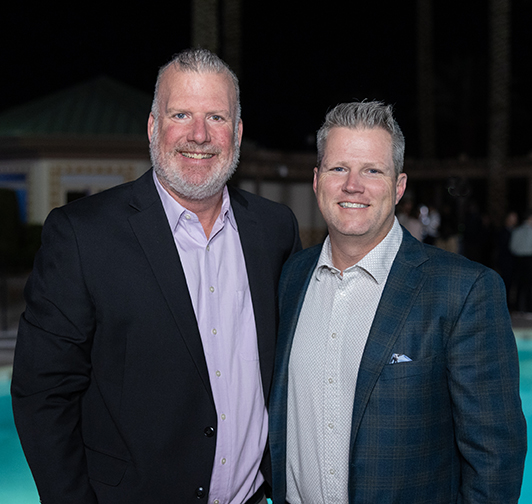
What is your background?
Charles Boan graduated from the University of Oklahoma with a degree in economics in 1991. He started immediately with Koch Industries in emulsion sales and then moved to a larger asphalt terminal in Omaha, where he remained through 1998. He was the supply manager on the U.S. river system, where he bought and sold asphalt and then went on to become a sales manager in Minneapolis in 2000. He is now the General Manager of Asphalt for Flint Hills Resources (FHR). He even sold clothing at the Big and Tall store in high school and college for five years in Chicago and Tulsa. But most importantly, he is the Chair of the Asphalt Institute for the 2025 year.
What were the biggest challenges you faced getting here? How did you overcome them?
Regarding day-to-day work, “Koch is very change-driven.” Charles started off with 14 account managers in 2000 and now he has four. They sell more volume and have better margins. But “managing that change is hard. When someone leaves, it is not automatic that they are replaced. We decide to replace them, stop some things or do some things differently. That’s very difficult but rewarding.”
Regarding the Asphalt Institute chair, “It’s been a challenging year to be the chair as, along with the usual chair jobs, getting Reed moved, onboarded, understanding his strengths, and building that relationship added to the work this year.”
Charles said it’s been a time-consuming and challenging year to be the chair but a great and rewarding time, nonetheless.
It’s been a very active chair year with Reed coming on board.
“Reed is a fantastic partner and very open to working the problem, whatever it is.” Charles said he and Reed work on the problems together.
“We’ll work together on his suggestions and my suggestions. He’s a great find, which he has proven to be a real partner. He has had great ideas. Ultimately, he runs Lexington. I hope I was able to be a good sounding board to allow him to make good decisions.” And after only 10 months, they’re finding a groove.
What impact do you hope to have?
Charles said that if they can set up Lexington and Asphalt Institute leadership in the most advantageous way, they’ll implement good ideas to lead us into the next 100 years.
The headquarters building expenditures that were approved this year should be a real signal to the Lexington and field staff at the Asphalt Institute about how the membership believes in them and values them. Membership is looking to the staff as a guiding light. “Membership should rest easy as the Asphalt Institute staff is on top of what they need to be on top of.”
The regional engineers are working on a ton of good things, along with the new industry stewardship group, including Paul Sohi and Chait Bhat. They are working on things that will be important for us long term.
“We have the right people working on the right things.”
How do you believe you have changed the Asphalt Institute/asphalt industry by being chair?
Charles was on the team that selected Reed Ryan as the new Asphalt Institute President. The last president lasted 24 years, and hopefully Reed will be there for another long tenure.
“We’re making real changes with the associate chairs that will make Asphalt Institute leadership more accountable, along with more revenue.”
We are “improving the physical lab in the Asphalt Institute building and making it a world-class lab and world-class teaching place.”
They have elevated some of the staff to vice presidents and hired Michelle Lowe as the Vice President of Marketing and Membership and Marisa Aull as the Executive Director of the Asphalt Institute Foundation.
By being the chair, Charles is helping lead these innovative changes.
Why is this role important to you?
“It’s very validating after being in the business for over 30 years.”
Charles said that this year has been the most impactful as chair, just because of all the changes we’ve seen. “It’s great to be a part of that. It will change the Asphalt Institute for a long time.”
What piece of advice would you give to any newcomers joining the asphalt industry?
“Get involved! Get to know the people.”
“It’s a great place to go to dinner. It’s a great place to play golf. But the real value to me is in the committee groups.”
What is something that most people don’t know about you?
Charles has been in the asphalt industry for 34 years.
“I have a real thing about the asphalt business. It means a lot to me. It’s raised my kids. It’s paid for my fun. It’s given me some recognition, so being the chair is a real thing for me.”
Charles said that he loves that we can pave roads with asphalt, it’s physical, we can truck it around and it’s a negotiable commodity.
“I love the people. I love the Asphalt Institute.”
Are there any common beliefs or practices related to this industry that you disagree with, and why?
“There’s an opportunity for all the various asphalt organizations to work more together to achieve more and to promote asphalt. We can get out of our silos.”
That includes liquid asphalt, asphalt pavement, rejuvenators, emulsions, recycling, FP squared and AMAP.
“We have all these silos. There are real places where we can work much better together.”
Can you describe a moment where you had to make a difficult decision in your role?
“Picking the next leader after 24 years of great leadership with Pete Grass. The committee took our decision very seriously. Once we found Reed, it was a unanimous decision.”
“Reed and I get along great; we have lots of conversations. We work well together.”
What’s your favorite thing about being the Asphalt Institute Chair?
“Being able to have an impact on Lexington, and all the member companies within the Asphalt Institute, both short-term and long-term. I really believe what we’re working on now will have an impact on the asphalt industry for a long period of time.”
Charles also mentioned another favorite of his was making some positive changes to the current staff.
“I really feel like I’m doing things that will help the asphalt industry for a long time. If you’re going to do something, you might as well be a part of leadership. Leave it better than you found it.”
Charles was one of the first few people I met in the asphalt industry when I started three years ago. He introduced me to people he knew. He drove me around St. Paul and gave me a tour of the Flint Hills refinery. He explained how asphalt works. He invited me to dinners at the Asphalt Institute meetings and immersed me in the industry. I don’t think I’d be where I am today without his involvement and guidance. Thank you, Charles!
Carbonara works for Russell Standard as a Procurement Manager and is part of the Asphalt Institute EPIC Leadership Class.